Attabad Lake was formed as a result of a massive landslide that took place on Jan. 4, 2010, in Gilgit-Baltistan. The Hunza river was blocked, gradually taking the shape of a lake, now famous as the Attabad Lake.
Twenty people died in the incident and 25,000 people of Gojal Valley were stranded. Gradually the lake extended up to 21 km in length and 330 ft in depth. More than six thousand people were displaced and around 170 houses and 120 shops were submerged in the lake. Many high profiles visited the region including Prime Minister, Army Chief, and many parliamentarians.
After four years the affectees are still waiting for the commitments made by the Government. Few people managed to rebuild their homes, but the majority are still hoping that their demands would be fulfilled.
Since the lake was formed the only means of crossing was by loading vehicles onto wooden boats. In 2015 the Chinese built a road tunnel that opened in September 2015.
The lake was formed due to a massive landslide at Attabad village in Gilgit-Baltistan, 9 miles (14 km) upstream (east) of Karimabad that occurred on January 4, 2010.The landslide killed twenty people and blocked the flow of the Hunza River for five months. The lake flooding has displaced 6,000 people from upstream villages, stranded (from land transportation routes) a further 25,000, and inundated over 12 miles (19 km) of the Karakoram Highway.The lake reached 13 miles (21 km) long and over 100 meters (330 ft) in depth by the first week of June 2010 when it began flowing over the landslide dam, completely submerging lower Shishkat and partly flooding Gulmit. The subdivision of Gojal has the greatest number of flooded buildings, over 170 houses, and 120 shops. The residents also had shortages of food and other items due to the blockage of the Karakoram Highway. By June 4 water outflow from the lake had increased to 3,700 cu ft/s (100 m3/s).
Water levels continued to rise on June 18, 2010, caused by a difference in the outflow and inflow of the new lake. As bad weather continued, the supply of food, medicine, and other goods was stopped as all forms of transportation including helicopter service to Hunza could not resume.
Victims of the landslide and expansion of the lake staged a sit-in protesting the lack of government action and compensation payments to them.
As a result of the damming of Hunza River, five villages north of the barrier were flooded. One village, Ayeenabad, was completely submerged. Major portions of another village, Shishkat, was also submerged. Around 40% of the village of Gulmit, which also serves as the headquarters of Gojal Valley, was also submerged. Significant portions of land in Hussain and Ghulkin villages of Gojal also got submerged as a result of the surging lake.
The entire population of Gojal valley, up to 25000 individuals, was affected as a result of the lake, due to difficulties of road access and reaching business markets and loss of land, houses, and agricultural products.
Attabad has been visited by both current and former Prime Ministers Yousuf Raza Gillani and Nawaz Sharif, and by the Chief Minister of Punjab Shahbaz Sharif, Sharif announced Rs100 million of aid for the victims of the Punjab government and Rs0.5 million for the relatives of those who died in the landslide.
Areas downstream from the lake remained on alert despite some officials believing that a major flood scenario was less likely as the river began flowing over the landslide dam during the first week of June 2010.Many people have been evacuated to 195 relief camps. Two hospitals downstream, the Kashrote Eye Vision Hospital and the Aga Khan Health Service, evacuated both their staff and equipment Some officials had incorrectly predicted that as soon as the lake began flowing over the landslide dam, a 60 feet (18 m) wave would hit the areas immediately downstream.
As of 14 June 2010, the water level continued to rise. Dawn News reported that “242 houses, 135 shops, four hotels, two schools, four factories, and several hundred acres of agricultural land” had been flooded, and villagers were receiving food and school fee subsidies. They reported that 25 kilometers (16 mi) of the Karakoram Highway and six bridges were destroyed. A special documentary on this issue Hunza Kahani by Waqar Ahmed Malik was on aired on Express news.
Frontier Works Organization blasted the spillway of the lake first on March 27, 2012, and then on May 15, 2012, lowering the lake’s water level by at least 33 feet (10 m). Now it has become one of the most beautiful touristic place & tourism asset for Pakistan.
After a long and harsh cold winter season here are finally the spring blossoms in Gilgit Baltistan. It is like a sunrise after a long sleep in the darkness. Spring blossoms in Gilgit Baltistan start in April and end in May every year. During spring blossoms the season becomes quite pleasing, the combination of colors like the white pinkish color of flowers and the white snow-covered mountains with the freshly growing light green herbs and plants makes its scenery and unmatchable beauty. People from all over the world, especially come to visit Gilgit Baltistan to witness this natural beauty. The color spectrum of this season is the main reason for tourist attraction. It is very difficult to explain the magnificent beauty of spring blossoms, to those who have not experienced it. Here are some pictures/ photos of spring blossoms, apricot and cherry blossoms in Gilgit Baltistan. Apart from these, there are many other places and perfect slots to visit in Gilgit Baltistan. Here are some suggestions for you.. enjoy…..
Explore the beauty and culture of Gilgit Baltistan with our curated list of the top 25 must-sees and best places to visit Gilgit Baltistan. From stunning mountain ranges to historic sites and traditional villages, these destinations offer a unique and unforgettable experience. Plan your trip now and discover why these places should be on everyone’s bucket list.
1. Shangrilla Lake & Resort Kachura Baltistan.
Shangrilla Lake & Resort, also known as “Lower Kachura Lake” is a beautiful and secluded natural lake located in Kachura, Baltistan, Pakistan. The lake is surrounded by lush green forests and towering snow-capped peaks, making it an ideal destination for nature lovers.
The lake is known for its crystal-clear waters and is a popular spot for boating and fishing. Visitors can also take a leisurely stroll around the lake and take in the beautiful views of the surrounding mountains and forests. The lake is also home to a number of rare and endangered species of birds and animals, making it a popular destination for birdwatchers and wildlife enthusiasts.
Shangrilla Lake and Reort Skardu Baltistan.
The lake is also home to the Shangrilla Resort, which offers visitors the opportunity to experience traditional Balti culture and hospitality. The resort is built in traditional Balti style and offers visitors a range of accommodation options, from deluxe rooms to traditional Balti-style houses.
The resort also has a restaurant that serves traditional Balti cuisine and offers panoramic views of the lake and surrounding mountains. Visitors can also enjoy a variety of recreational activities such as horse riding, hiking and paragliding.
In conclusion, Shangrilla Lake & Resort is a must-visit destination for anyone interested in nature, culture, and adventure. The lake offers a unique blend of natural beauty and traditional culture, making it an ideal destination for nature lovers and adventure seekers. The resort provides the opportunity to experience traditional Balti culture and hospitality, and the crystal-clear lake water, beautiful views of the surrounding mountains and forests, and rare and endangered species of birds and animals make it a great destination for birdwatchers and wildlife enthusiasts.
The Baltoro Glacier, located in the Karakoram mountain range in Pakistan, is a natural wonder that should be on every traveler’s bucket list. This majestic glacier is one of the longest glaciers outside of the polar regions, stretching for over 62 kilometers.
As you trek along the glacier, you’ll be surrounded by towering peaks that rise up on either side, including the famous K2, the second-highest mountain in the world. The glacier itself is a breathtaking sight, with its sparkling blue ice and intricate patterns created by years of the slow movement.
One of the highlights of visiting the Baltoro Glacier is the opportunity to set up camp on its banks and witness the stunning views of the surrounding mountains at sunset and sunrise. The region is also home to many high-altitude lakes, which are a beautiful sight to see.
The trek to the Baltoro Glacier is not for the faint of heart, as it is a challenging and strenuous journey that requires a high level of physical fitness. However, for those who are willing to put in the effort, the rewards are well worth it. The breathtaking scenery, the remote wilderness, and the sense of accomplishment that comes from completing the trek make it a truly unforgettable experience.
In conclusion, the Baltoro Glacier is a must-visit destination for anyone interested in travel and adventure. It offers unparalleled natural beauty and a chance to challenge yourself in a breathtakingly beautiful setting. A glacier is a place that will leave you in awe and will be etched in your memory forever.
3. Altit Fort, Hunza Valley Gilgit Baltistan.
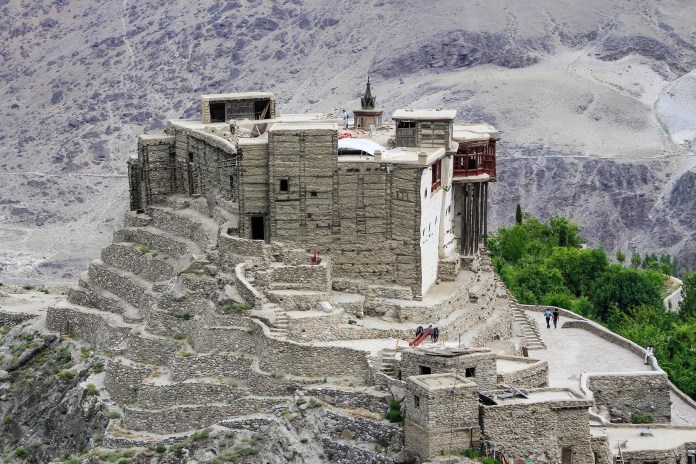
Altit Fort, located in the Hunza Valley of Gilgit Baltistan, Pakistan, is a historical treasure that offers a glimpse into the region’s rich cultural heritage. The fort is believed to have been built in the 11th century and has been an important stronghold for the local rulers throughout history.
The fort is perched on a steep hilltop, offering breathtaking views of the surrounding valley and the nearby Karakoram mountain range. The fort is a unique blend of architectural styles, with the traditional mud-brick construction of the lower level and the stone masonry of the upper level.
One of the most striking features of the fort is its massive wooden doors, which are intricately carved and adorned with intricate patterns. Inside the fort, you can explore the various rooms and courtyards, including the living quarters of the ruling family and the fort’s defensive structures.
Visitors to the Altit Fort will also have the opportunity to learn about the history and culture of the Hunza Valley from the local guide. The fort also serves as a cultural center, hosting exhibitions and performances of traditional music and dance.
In conclusion, Altit Fort is a must-see destination for anyone interested in history and culture. It offers a unique opportunity to explore an ancient fortress and learn about the region’s rich heritage. The stunning views from the fort and the local hospitality make it a truly unforgettable experience.
4. Nagar Valley Gilgit Baltistan.
The Nagar Valley, located in the Gilgit-Baltistan region of Pakistan, is a picturesque destination that is known for its natural beauty and rich cultural heritage. The valley is situated at the base of the spectacular Rakaposhi peak, which at 7,788 meters is one of the highest mountains in the region.
The valley is a popular destination for trekkers and hikers, offering a variety of trails that wind through lush green meadows, past sparkling streams, and snow-capped peaks. The trek to the Rakaposhi base camp is considered one of the most beautiful treks in the region.
The valley is also home to a number of ancient villages, each with its own unique culture and traditions. Visitors can explore these villages and learn about the way of life of the local people, as well as the history and culture of the region.
The Valley is also home to many historical and cultural sites such as the Altit and Baltit forts, which are architectural wonders and a testament to the region’s rich history.
In conclusion, Nagar Valley is a must-visit destination for anyone interested in nature, adventure, and culture. The valley’s natural beauty, rich cultural heritage, and the hospitality of local people will leave a lasting impression on any traveler. Whether you’re a seasoned trekker or just looking to explore a new place, Nagar Valley is a destination that offers something for everyone.
5. Ishkoman Valley, Ghizar River, Gilgit Baltistan, Pakistan
The Ishkoman Valley, located in the Ghizar district of Gilgit Baltistan, Pakistan, is a hidden gem that offers visitors a chance to experience the region’s stunning natural beauty and rich cultural heritage. The valley is situated along the banks of the Ishkoman River, which is a tributary of the Ghizar River.
The valley is surrounded by snow-capped peaks and lush green meadows, making it a popular destination for trekkers and hikers. The valley is also a great spot for fishing and river rafting. The trek to the Khalti lake, a high-altitude lake located in the valley is a must-do for any visitors.
The valley is also home to a number of traditional villages, each with its own unique culture and traditions. Visitors can explore these villages and learn about the way of life of the local people, as well as the history and culture of the region.
Ishkoman Valley is also home to the ancient Ganish village, which is believed to be one of the oldest human settlements in the region. The village is an architectural wonder and a testament to the region’s rich history.
In conclusion, the Ishkoman Valley is a must-visit destination for anyone interested in nature, adventure, and culture. The valley’s natural beauty, rich cultural heritage, and the hospitality of the local people will leave a lasting impression on any traveler. The Valley offers an opportunity to experience the rustic and unspoiled beauty of the region and its people.
6. Passu Gilgit Baltistan.
Passu, located in the Gilgit-Baltistan region of Pakistan, is a picturesque village that is known for its natural beauty and rich cultural heritage. The village is situated at the base of the spectacular Passu Cones, a group of peaks that are part of the Karakoram mountain range. The Passu Cones are a popular destination for trekkers and hikers, offering a variety of trails that wind through lush green meadows, past sparkling streams, and alongside snow-capped peaks.
The village is also home to the Passu Glacier, which is one of the largest glaciers in the region. Visitors can take a day tour of the glacier and learn about the unique ecosystem that is found there. The Passu village is also home to a number of traditional houses, which are built in the traditional style of the region. Visitors can explore these houses and learn about the way of life of the local people.
Passu is also known for its unique culture and traditions, which are influenced by the neighboring countries of China and Afghanistan. Visitors can learn about the history and culture of the region by visiting the local cultural centers or by participating in traditional festivals and events.
In conclusion, Passu is a must-visit destination for anyone interested in nature, adventure, and culture. The village’s natural beauty, rich cultural heritage, and the hospitality of the local people will leave a lasting impression on any traveler. The Passu Glacier and Passu Cones are the major attractions of the village and are a must-see for any visitors to the region.
7. Deosai, Skardu Baltistan.
Deosai National Park, located in Skardu, Baltistan, is a beautiful and remote area that is known for its natural beauty and rich biodiversity. The park is situated at an altitude of over 4,000 meters above sea level and is home to a variety of different ecosystems, including alpine meadows, forests, and wetlands.
The park is a popular destination for trekkers and hikers, offering a variety of trails that wind through lush green meadows and past sparkling streams. The trek to Sheosar lake, the highest lake in Pakistan, is a must-do for any visitors to the park. The lake is surrounded by snow-capped peaks and is a spectacular sight.
Deosai is also home to a wide variety of wildlife, including the Himalayan brown bear, the snow leopard, and the ibex. Visitors can take a guided tour of the park to learn about the unique ecosystems and the wildlife that is found there.
Deosai National Park is also home to a number of traditional villages, each with their own unique culture and traditions. Visitors can explore these villages and learn about the way of life of the local people, as well as the history and culture of the region.
In conclusion, Deosai National Park is a must-visit destination for anyone interested in nature, adventure, and culture. The park’s natural beauty, rich biodiversity and the hospitality of the local people will leave a lasting impression on any traveler. The Sheosar lake and the Deosai Plateau are the major attractions of the Park and are a must see for any visitors to the region.
8. Trango Towers, Gilgit-Baltistan, The towers of Inspiration.
Trango Towers, located in Gilgit-Baltistan, Pakistan, are a group of towering granite peaks that are known for their spectacular beauty and challenging climbing routes. The towers, also known as the “Towers of Inspiration,” are part of the Karakoram mountain range and offer some of the most challenging climbing routes in the world.
The Trango Towers are made up of several peaks, the most famous of which is the Great Trango Tower, which stands at 6,286 meters (20,623 feet) tall. The Great Trango Tower is considered to be one of the most challenging and sought-after climbing routes in the world.
The Trango towers are surrounded by glaciers, ice fields and rugged terrain making it a challenging climb for even the most experienced climbers. The climb requires technical expertise and proper equipment, but the views from the summit are truly breathtaking and well worth the effort.
The Trango towers are not only famous for their climbing routes but also for the stunning natural beauty of the surrounding area. The towers offer panoramic views of the surrounding peaks, glaciers, and valleys, making it a popular destination for trekkers and hikers. The area is also home to a variety of wildlife, including the Himalayan ibex and the snow leopard.
In conclusion, the Trango Towers are a must-visit destination for anyone interested in nature, adventure, and climbing. The towers’ natural beauty, challenging climbing routes and the hospitality of the local people will leave a lasting impression on any traveler. The Great Trango Tower is the most famous peak among the towers, and it is considered as one of the most challenging and sought-after climbing routes in the world.
9. Attabad Lake Gilgit Baltistan.
Attabad Lake, also known as Gojal Lake, is a beautiful and serene lake located in the Gilgit-Baltistan region of Pakistan. The lake was formed in 2010 as a result of a massive landslide that blocked the Hunza River, creating a natural dam.
The lake is surrounded by towering mountains, lush green forests and the Hunza river creating a breathtaking landscape. The lake is a popular destination for visitors who enjoy boating, fishing and swimming in the crystal-clear waters. The lake is also a great spot for photography and sightseeing, as visitors can take in the beautiful natural surroundings.
Attabad lake is also an important source of hydroelectric power for the region. The lake has been harnessed to generate electricity, helping to meet the energy needs of the local communities.
The lake is also home to the Attabad village, which was submerged by the lake’s formation. The government resettled the villagers to a new location, but the lake has also brought a new source of livelihood for the locals through tourism. Visitors can take a boat ride to the village and interact with the locals to learn about their culture and way of life.
In conclusion, Attabad Lake is a must-visit destination for anyone interested in nature, adventure, and culture. The lake’s natural beauty, crystal-clear waters, and the hospitality of the local people will leave a lasting impression on any traveler. The lake is a perfect spot for boating, fishing and swimming, and also a great spot for photography and sightseeing. The Attabad village is also a great place to visit and interact with the locals to learn about their culture and way of life.
10. Baltit Fort, Hunza Valley, Gilgit-Baltistan.
The Baltit Fort, also known as the “Karimabad Fort,” is a historic fort located in the Hunza Valley of Gilgit-Baltistan, Pakistan. The fort dates back to the 8th century and is considered to be one of the most important examples of traditional architecture in the region.
The fort is built on a hilltop and offers panoramic views of the Hunza Valley and the surrounding mountains. The fort was originally built as a defense structure and served as the home and seat of power for the ruling Mirs of Hunza. The fort has been renovated and restored over the centuries and now serves as a museum, showcasing the region’s rich cultural heritage.
The fort is a great place to visit for anyone interested in history and architecture. Visitors can explore the fort’s many rooms and corridors and learn about the region’s rich cultural heritage. The fort’s architecture is a blend of different styles, including Tibetan, Persian, and local elements.
The fort also has a rooftop terrace, from where visitors can take in the beautiful views of the surrounding mountains and valleys. The fort has a rich history, and visitors can learn about the ruling Mirs of Hunza and their role in shaping the region’s history.
In conclusion, Baltit Fort is a must-visit destination for anyone interested in history, architecture and culture. The fort is one of the most important examples of traditional architecture in the region and offers panoramic views of the Hunza Valley and the surrounding mountains. It’s a great place to visit for anyone interested in history and architecture and offers the opportunity to explore the fort’s many rooms and corridors and learn about the region’s rich cultural heritage.
11. Chunda Valley Skardu Baltistan.
Chunda Valley is a beautiful and serene valley located in Skardu, Baltistan, Pakistan. The valley is situated at an altitude of around 2,500 meters and is surrounded by towering snow-capped peaks and lush green forests. The valley is home to several traditional villages, where visitors can learn about the local culture and way of life.
The valley is known for its picturesque landscapes and is a popular destination for trekkers and hikers. Visitors can explore the valley’s many trails, which offer breathtaking views of the surrounding mountains and glaciers. The valley is also home to several high-altitude lakes, which is a popular spots for boating and fishing.
In conclusion, Chunda Valley is a must-visit destination for anyone interested in nature, culture and adventure. The valley offers a unique blend of natural beauty and traditional culture, making it an ideal destination for trekkers and hikers. The valley is also home to several traditional villages and architectural structures, such as the Chundo Fort, which offers visitors the opportunity to learn about the local culture and way of life.
12. Chaqchan Mosque, Khaplu, Baltistan.
Chaqchan Mosque is a historic mosque located in the town of Khaplu, Skardu-Baltistan, Pakistan. The mosque is known for its unique architectural style and is considered one of the most important architectural structures in the region.
The mosque was built in the 14th century and is believed to have been constructed by the famous Balti king, Syed Ali Hamdani. It is said that the mosque was built as a place of worship for the local community and as a symbol of the king’s devotion to Islam.
Chaqchan Mosque Khaplu
The mosque is built entirely out of wood and stone, and is known for its intricate carvings and woodwork. The mosque’s most striking feature is its wooden dome, which is covered in intricate carvings and is said to be one of the most beautiful examples of wooden dome architecture in the world.
The mosque is also home to a number of historic artifacts and manuscripts, including a Quran dating back to the 14th century. Visitors can also explore the mosque’s many courtyards and gardens, which offer beautiful views of the surrounding mountains and valleys.
In conclusion, Chaqchan Mosque is a must-visit destination for anyone interested in history, culture, and architecture. The mosque is an architectural masterpiece, known for its unique wooden dome, intricate carvings and woodwork. The mosque is also home to a number of historic artifacts and manuscripts, providing visitors with a unique glimpse into the rich cultural heritage of Skardu-Baltistan. The mosque is also surrounded by beautiful gardens, which offer stunning views of the surrounding mountains and valleys.
13. Phandar Valley, Gilgit-Baltistan.
Phandar Valley is a picturesque valley located in the Ghizer district of Gilgit-Baltistan, Pakistan. The valley is situated at an altitude of around 2,500 meters above sea level and is surrounded by towering snow-capped peaks and lush green forests.
Phandar Valley is known for its natural beauty, and is a popular destination for nature lovers, hikers, and trekkers. Visitors can enjoy a range of outdoor activities, such as horseback riding, bird watching, and fishing. The valley is also home to a number of rare and endangered species of birds and animals, making it a popular destination for wildlife enthusiasts.
In conclusion, Phandar Valley is a must-visit destination for anyone interested in nature, culture, and adventure. The valley offers a unique blend of natural beauty and traditional culture, making it an ideal destination for nature lovers and adventure seekers.
it’s located in Ghizer district of Gilgit-Baltistan, Pakistan and known for its natural beauty, and is a popular destination for nature lovers, hikers, and trekkers. Visitors can enjoy a range of outdoor activities, such as horseback riding, bird watching, and fishing. The valley is also home to a number of rare and endangered species of birds and animals, making it a popular destination for wildlife enthusiasts. Additionally, it’s a popular destination for trout fishing, as the streams in the valley are home to large populations of trout. The valley is surrounded by towering snow-capped peaks and lush green forests, making it a perfect place for nature lovers and adventure seekers to explore.
14. Rainbow Lake, Minimarg, Gilgit Baltistan.
Rainbow Lake, also known as “Saiful Muluk Lake,” is a stunning alpine lake located in the Minimarg area of Gilgit-Baltistan, Pakistan. The lake is situated at an altitude of around 3,224 meters above sea level and is surrounded by towering snow-capped peaks and lush green forests.
The lake is known for its crystal-clear waters and the stunning rainbow-colored hues that appear on the surface of the water, giving the lake its name. The lake is fed by a nearby glacier and is surrounded by wildflowers, making it a popular destination for nature lovers and photographers.
The Rainbow Lake is also a popular destination for trekkers and hikers, as it is located in the heart of the Himalayan mountain range. Visitors can enjoy a range of outdoor activities, such as horseback riding, bird watching, and fishing. The area is also home to a number of rare and endangered species of birds and animals, making it a popular destination for wildlife enthusiasts.
In addition to its natural beauty, the Rainbow Lake is also an important religious site for the local community, and many people visit the lake to offer prayers and perform rituals. The lake is also surrounded by beautiful meadows and pastures, making it an ideal spot for camping and picnics.
In conclusion, Rainbow Lake is a must-visit destination for anyone interested in nature, culture, and adventure. The lake offers a unique blend of natural beauty and religious significance, making it an ideal destination for nature lovers and adventure seekers. The lake is surrounded by towering snow-capped peaks and lush green forests, making it a perfect place for nature lovers and adventure seekers to explore. Additionally, it’s a popular destination for trekkers and hikers, as it is located in the heart of the Himalayan mountain range.
15. Cold Desert of Skardu, Gilgit-Baltistan.
There are two cold deserts in Skardu. One is Katpana Cold Desert and the second is Sarfaranga Cold Desert Shigar. Both are is unique and beautiful region located in Gilgit-Baltistan, Pakistan. The desert is situated at an altitude of around 2,500 meters above sea level and is known for its barren, rocky landscape, and frigid temperatures.
The Cold Desert of Skardu is a popular destination for trekkers and hikers, as it offers a range of challenging trails and routes through the rugged terrain. Visitors can also enjoy a range of outdoor activities, such as horseback riding, rock climbing, and paragliding.
The Cold Desert of Skardu is also a popular destination for photography enthusiasts, as the barren landscape and the rugged peaks offer a range of spectacular photo opportunities. The area is also famous for its starry nights which offer a great view of the Milky Way galaxy, making it a perfect destination for stargazers and night sky enthusiasts.
In conclusion, the Cold Desert of Skardu is a must-visit destination for anyone interested in nature, culture, and adventure. The desert offers a unique blend of natural beauty and rugged terrain, making it an ideal destination for nature lovers and adventure seekers. Additionally, the desert is home to ancient monasteries, traditional Balti villages, and a wide variety of plant and animal life, making it a perfect destination for culture enthusiasts as well.
16. Upper Kachura Lake, Skardu, Gilgit–Baltistan.
Upper Kachura lake is also known as Frogh Scho. This lake is the second most beautiful lake in the vicinity of Skardu city. Upper Kachura lake is at a distance of 27.7km from Skardu city. It is easily accessible by cars. It is a beautiful lake with fresh and clear blue water surrounded by huge mountains and wild trees. The trees are covered with fruits mainly apricots. The temperature in summer can reach up to 20 C and in winter the lake is frozen. The main attractions of Upper Kachura lake include its breathtaking scenery, trout fishing, boating, and mountain or hill hiking, and trekking.
Fresh water lakes in Skardu
The lake is a popular destination for tourists, as it offers a range of activities, including boating, fishing, and swimming. Visitors can also enjoy a range of outdoor activities such as hiking and rock climbing in the surrounding mountains. There is also a resort called Shangrila resort located near the lake which offers accommodation and other amenities to the visitors.
The lake is also a popular destination for photography enthusiasts, as the surrounding landscape offers a range of spectacular photo opportunities. The lake is also famous for its starry nights, which offer a great view of the Milky Way galaxy, making it a perfect destination for stargazers and night sky enthusiasts.
17. Manthokha Waterfall Kharmang Baltistan.
Manthokha Waterfall is a stunning natural wonder located in the Kharmang district of Gilgit-Baltistan, Pakistan. The waterfall is situated at an altitude of around 2,000 meters above sea level and is surrounded by breathtaking mountain landscapes. The waterfall is fed by the melting glaciers of the nearby Karakoram range, making it a popular destination for tourists.
The waterfall is a popular destination for hikers and trekkers, as the surrounding area offers a range of hiking and trekking trails that lead to the waterfall. The trek to the waterfall is considered to be moderately difficult, and the journey offers a range of spectacular views of the surrounding mountains and valleys.
The waterfall is also a popular destination for photography enthusiasts, as the surrounding landscape offers a range of spectacular photo opportunities. The waterfall is particularly beautiful during the monsoon season, when it is fed by heavy rainfall, making it even more spectacular.
In addition to the waterfall, the Manthokha area is also home to a wide variety of plant and animal life, making it a popular destination for nature enthusiasts. Visitors can spot a variety of wild animals such as ibex, snow leopard, and black bear, as well as a wide variety of birds, such as the Himalayan Monal.
The waterfall can be reached by car or by local transport from Skardu, which is the main city of the region. It is also possible to reach Manthokha waterfall by trekking from nearby villages or towns. The waterfall is located near the Kharmang village, which is a traditional Balti village and offers accommodation and other amenities to the visitors.
In conclusion, Manthokha Waterfall is a must-visit destination for anyone interested in nature, adventure and culture. The waterfall offers a unique blend of natural beauty and adventure, surrounded by breathtaking mountain landscapes and traditional Balti villages. The area is also home to a wide variety of plant and animal life, making it a perfect destination for nature enthusiasts as well.
18. Shigar Fort (Foung Khar) The Place on Rocks.
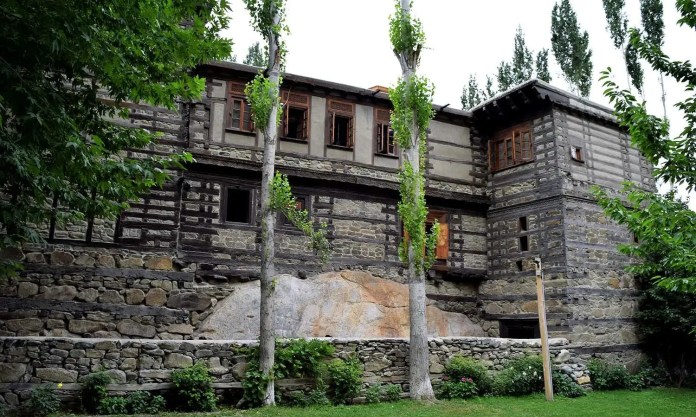
Shigar Fort, also known as Foung Khar, is a historic fort located in the Shigar Valley of Gilgit-Baltistan, Pakistan. The fort is situated on a steep rock outcropping overlooking the Shigar River, and is considered to be one of the most picturesque forts in the region.
The fort was built in the 17th century by the local ruler, Raja Ghazanfar Khan, and served as a residence for the local rulers and their court. The fort is a fine example of traditional Balti architecture, with its curved wooden roofs, intricate carvings, and beautiful frescoes.
The fort has been carefully restored and is now open to visitors, who can explore its many rooms, courtyards, and rooftop terraces. Visitors can also take a guided tour of the fort, which provides an in-depth look at the history and culture of the region.
The fort is surrounded by the beautiful Shigar Valley, which is known for its lush green landscapes, terraced fields, and traditional Balti villages. The valley is also a popular destination for trekkers and hikers, as it offers a range of trekking and hiking trails that lead through the surrounding mountains and valleys.
In addition to its historical and cultural significance, the Shigar Fort also offers a range of modern amenities, including a restaurant, a souvenir shop, and a small museum that displays artifacts from the region’s history.
The fort is located in Shigar valley which is a 2 hours drive from Skardu, the main city of the region. It is also possible to reach the fort by trekking from nearby villages or towns. The fort is surrounded by traditional Balti villages, which offer accommodation and other amenities to the visitors.
In conclusion, Shigar Fort is a must-visit destination for anyone interested in history, culture, and architecture. The fort offers a unique blend of natural beauty and rich cultural heritage, surrounded by breathtaking mountain landscapes, lush green valleys and traditional Balti villages. The area is also home to a wide variety of plant and animal life, making it a perfect destination for nature enthusiasts as well.
19. Rakaposhi, The Killer Mountain.
Rakaposhi is a beautiful and majestic mountain located in the Karakoram range of Gilgit-Baltistan, Pakistan. The mountain stands at an impressive 7,788 meters (25,551 ft) tall, making it one of the highest peaks in the region. The mountain is often referred to as the “Killer Mountain” due to its steep and difficult terrain, which has claimed the lives of several climbers over the years.
Rakaposhi is considered to be one of the most challenging and beautiful mountains in the world, and is a popular destination for mountaineers and trekkers from around the globe. The mountain is renowned for its dramatic and rugged peaks, as well as its breathtaking views of the surrounding valleys and glaciers.
The climb to the summit of Rakaposhi is a challenging and demanding undertaking, requiring a high level of technical skill, physical fitness, and experience. The climb typically takes several weeks, and involves traversing glaciers, steep rock faces, and high-altitude passes.
Despite its challenging terrain, the mountain is also a popular destination for trekkers and hikers, who can take on the less technical routes that lead to the base camp or nearby valleys. These treks offer an opportunity to explore the beautiful and remote regions of the Karakoram, and to experience the rich culture and hospitality of the local people.
Rakaposhi is located in the Nagar valley, around 100km from the city of Gilgit. The base camp can be reached by a jeep drive from Gilgit and is also accessible by trekking from the nearby villages. The best time to visit the mountain is from June to September.
In conclusion, Rakaposhi is a magnificent mountain that offers a unique blend of natural beauty and adventure. The mountain is a true masterpiece of nature, with its steep and rugged peaks, glaciers and breathtaking views. Despite its challenging terrain, the mountain is a popular destination for both experienced mountaineers and trekkers alike.
20. Blind Lake, Jarbazoo Shigar Valley.
Blind Lake, also known as Jarbazoo Lake, is a picturesque and secluded lake located in the Shigar valley of Gilgit-Baltistan, Pakistan. The lake is situated in the midst of a rugged and remote landscape, surrounded by towering peaks and glaciers. The lake is a popular destination for trekkers and hikers, who come to explore the beautiful and unspoiled wilderness of the Shigar valley.
Blind Lake is known for its crystal clear waters, which are fed by melting glaciers high in the surrounding mountains. The lake is also home to a variety of fish and other aquatic life, making it a popular spot for fishing and boating.
The lake is also known for its natural beauty, with the surrounding mountains providing a dramatic backdrop for the lake. The lake is a popular spot for photography and bird watching, with a wide variety of bird species found in the area.
The lake can be reached by a jeep drive from Skardu or by trekking from the nearby villages. The best time to visit the lake is from June to September when the weather is warm and the snow has melted, making it possible to reach the lake on foot.
In conclusion, Blind Lake, or Jarbazoo lake is a hidden gem of Gilgit-Baltistan, Pakistan. The lake is a perfect place to enjoy the natural beauty of the Shigar valley, surrounded by towering peaks and glaciers. The lake is a popular spot for trekkers, hikers, and nature lovers, offering a chance to explore the unspoiled wilderness of the region and experience the rich culture and hospitality of the local people.
The Basha Valley Shigar, with its hot springs, is one of the favorite places to visit. It receives very few foreign visitors each year, with a handful of trekkers and climbers crossing the Haramosh while traversing up the Chomo Lungma (glacier).
A 3-hour drive up from Skardu brings travelers to upper Shigar ValIey Basho Valley. At this point, the Shigar Valley is perhaps 10 or more kilometers across. In the fall season, sometimes nomadic gold miners work at the rivulets. They submerge their hands in the Iess then 0o degree Celsius water and manually pan for gold. Traversing the valley, at the south bank of the Basha River is the extended village Tisar. There is a police checkpoint just before entering Tisar. Only very few foreigners travel up this valley. About 6 kilometers to the northwest and up the river is the small village of Chutran.
The name literally means “hot water” in the local Balti tongue. In Chutran, there is a medicinal hot spring. Over the decades, the spa has become popular with the local people, who are even coming from beyond Hunza (15 hours by road) to soak in the 40-plus degree Celsius water. Nestled at the base of the northeast side of the Haramosh Range, Chutron is partially shaded and thereby relatively cool. Its scalloped terraced wheat fields are intercrossed by footpaths and stone field boundaries, all of which conspire to provide beautifully pastoral views and retain a primitive charm, seemingly stuck in the 19th century.
The village of Hemaesil is about 35 to 45 minutes by Jeep up the Basha River, just across a gushing stream from Chutron. On the opposite side of the river is Dogoro. Just upriver from Niaslo is Doko, where an ancient bridge that is sometimes impassable.
Braldo is one of the isolated and scantily inhabited Valleys. About 40 km North of Shigar valley is the start of Braldo valley, the most isolated of all the trans-Karakoram valleys. Braldo is wrapped in snow-covered peaks and the largest glaciers outside the polar region. But there is nothing comparable to the wonderful view of the glaciers. Braldo has the distinction of being the least interfered with, of all settlements of Baltistan, and one of the last few surviving cultural satellites of Baltistan. Virtually untouched by the winds of change and modernization till then, Braldo is now a favorite destination for trekkers and culture lovers.
Braldo is one of the isolated and scantly inhabited Valleys. About 40 km North of Shigar valley is the start of Braldo valley, the most isolated of all the trans-Karakoram valleys. Braldo is wrapped in snow-covered peaks and the largest glaciers outside the polar region.
The Braldo Valley is heavily traveled in the summer mountaineering months. Supplies, food, tea, and sleep facilities are thus readily available. The entire ridgeline from above Yuno northwest to the Braldo River has been worked in places. Previously this area was known as Bangia Bridge, referring to the bridge crossing the main channel of the Braldo River immediately south of the new town. Today, the new village of Haiderabad sits very close to many of the Bangla Bridge. The west side of Buspar Peak, directly above the very small village of Baha near the outlet of the Braldu Valley is currently being worked. To enter the Braldu Valley, one must follow the Jeep trail as it gradually turns north. Nearing Baha, the road was blasted out of a rock face. The road squeezes by the fast-flowing river, passing an exposed pegmatite so closely that it can be easily touched from inside the vehicle. Two to three kilometers past Baha, there is a military checkpoint at which foreigners are asked to register. Another couple of kilometers to the north, there is a 40-year-old bridge with a police checkpoint. The bridge spans the Braldo River leaving travelers on the northwest bank. : The village of Teston is roughly two kilometers north of the bridge and a bit up from the road.
The village of Dassu is actually about 5 I, kilometers upriver around a sharp eastward bend. Near the east end of this small village are several small shops selling food, staples, and basic supplies. Continuing eastward on the north side of the Braldu, travelers encounter a Jeep road that veers off to the left, climbing a very steep zigzag trail that winds up on a small plateau home to the village of Nyet. The sole Jeep trail leading further into the valley at one time clung to the north side of the river until the bridge crossing at Apo Ali Gun. A new road now crosses the Braldu River closer to Byansapi. A walk across the Apo Ali Gun bridge and about5 kilometers north brings travelers to a deep gash known as the Hoh Nala. Just across the bridge that spans HohNala and a few minutes to the south is the village of Chhaqpou. Accessibility: Braldo valley is an extension of Shigar Valley reachable via Skardu, which is accessible by a 22-hour drive along the Karakoram Highway from the capital of Pakistan, Islamabad; Or a 6-hour drive from Gilgit or alternatively by an easy 45 minutes plane flight from Islamabad to Skardu.
Askole:
Askole or Askoly is a small town located in the Braldu Valley in the most remote region of Karakoram Mountains in Northern Areas, Pakistan. It is the last settlement before the wilderness of the Karakoram. Askole is the gateway to four of the world’s fourteen highest peaks known as Eight-thousanders (above 8,000m).
Explore the breathtaking beauty of Skardu Baltistan through its stunning freshwater lakes. From crystal clear waters to breathtaking mountain surroundings, these lakes offer a peaceful escape from the hustle and bustle of city life. Whether you’re looking for a peaceful dip, a thrilling paddle, or just a relaxing escape, Skardu’s freshwater lakes have something for everyone. In this article, we’ll explore some of the most stunning freshwater lakes in Skardu Baltistan. Don’t miss out on the chance to experience these amazing freshwater lakes in Skardu Baltistan.
Kachura Lake:
About 32 km (20 miles) from Skardu, a 2-hour drive by jeep, lies the stunning Kachura Lake. With its crystal clear waters, this lake offers a peaceful escape surrounded by breathtaking mountain scenery. In the springtime, the banks of the lake are adorned with a multitude of colorful flowers, while the trees are laden with blooming peach, apricot, and apple blossoms. Kachura Lake is also known for its excellent trout fishing opportunities. Whether you’re a fishing enthusiast or just looking for a peaceful escape, Kachura Lake is a must-visit destination in Skardu.
Sadpara Lake:
Just 8 km (5 miles) south of Skardu, a 20-minute drive by jeep, lies the serene Satpara Lake. Surrounded by towering glaciers and mountains, this lake features an island in the middle of its clear waters, accessible by boat. Known for its excellent fishing opportunities, Satpara Lake is a popular destination for tourists and locals alike. With its gorgeous mountain scenery and serene atmosphere, it’s easy to see why this lake is considered a true gem of Skardu.
Upper Kachura Lake:
Located 10 km above the main Kachura Lake, Upper Kachura Lake can be accessed via a jeep road. This lake is privately owned and offers opportunities for boating. However, caution should be taken while enjoying these activities.
Lower Kachura Lake (Shangrila):
The Lower Kachura, also known as Shangrila, is a one-of-a-kind resort located just 20 minutes from Skardu. With almost 70 Swiss-style cottages facing the lake, this resort offers a truly mesmerizing experience. The resort, established by the late Brigadier Muhammad Aslam Khan, offers a variety of services, including airport pick-up and drop-off, sports facilities, and more. Whether you’re looking for a relaxing getaway or a thrilling adventure, Lower Kachura Lake is the perfect destination.
Named for its unique “blind” status, Sheosar Lake is located near Chachur Top in the Deosai region. This lake can be reached from Skardu via Ali Malik Pass or from Chilim, Astore using the Chachur Top. With its serene beauty and tranquil atmosphere, Sheosar Lake is an ideal destination for picnicking and outdoor recreation.
Snow Lake:
Situated at the junction of the Biafo and Hisper Glaciers, Snow Lake is a snow-covered lake that remains frozen year-round. Accessible via Askole, Snow Lake is a five-day trek from the K2 Base Camp. With towering mountains all around, this lake offers an unforgettable experience for the adventurous traveler.
In conclusion, Skardu Baltistan is home to some of the most breathtaking freshwater lakes in the world. From the serene waters of Kachura Lake to the snow-covered beauty
Deosai National Park Gilgit Baltistan is one of the most beautiful national parks in Pakistan, located in the heart of Gilgit-Baltistan. The park is renowned for its stunning natural beauty, unique ecosystem, and diverse flora and fauna. Deosai National Park is a must-visit destination for nature lovers, adventure enthusiasts, and anyone who wants to experience the mesmerizing beauty of the Himalayas.
Deosai National Park Gilgit Baltistan: A Breathtaking Natural Landscape.
Deosai is Located at a distance of 32 km from Skardu, is one of the highest plateaus in the world standing at 4100m, and is spread over 3000sq.km. The spectacular scenery that Deosai offers from mid-June to mid-September is highlighted by some 342 species of vegetation.
Top Five Places/Tourist Attractions at Deosai.
The landscape is covered with wildflowers that make Deosai radiant with bright colors through the summer. The diverse vegetation supports wildlife and an ecosystem that is a unique example of adaptation to high altitudes.
In addition to the Himalayan brown bear, Deosai and the surrounding valleys are home to the Himalayan Ibex, Red Fox, Golden Marmot, Wolf, snow leopard & over 125 residents, and migratory birds. This area is a place of attraction for those who are interested in Trophy Hunting.
Location and Access to The World’s 2nd Highest Plateau Gilgit Baltistan.
Deosai The World’s 2nd Highest Plateau Gilgit Baltistan is located in the northeastern region of Pakistan and covers an area of about 3,000 square kilometers. The park is easily accessible from the Skardu and Astore districts of Gilgit-Baltistan. Visitors can reach the park by road, and the journey is a thrilling adventure in itself, as the road winds through the majestic Himalayan mountains.
Drive and visit the remarkable Plateau at 4000m above sea level. The Deosai plain (4000 m), a vast high-altitude plateau covering an area of over 400 square km, south, and west of Skardu, borders Indian Kashmir. In Balti, the region is known as “Bhear Sar” which means place of flowers. Nowhere lower than 4000 m, this uninhabited alpine grassland has numerous clear streams with unusual snow trout, a large brown bear population, and a multitude of golden marmots.
Flora and Fauna of Deosai National Park Gilgit Baltistan.
Deosai National Park Gilgit Baltistan is a unique ecosystem, home to an array of flora and fauna. The park is known for its stunning wildflowers, which bloom in the summer months and create a colorful carpet of flowers across the landscape. The park is also home to several species of birds, including the Himalayan griffon vulture, golden eagle, and peregrine falcon. The park is also home to several species of mammals, including the Himalayan brown bear, snow leopard, ibex, and red fox.
Deosai is surprisingly rich in plants and animals, bursting into life during the brief spring and summer months. The plateau is home to the Himalayan Brown Bear, unique to this part of the world. Other mammals found on Deosai included Tibetan Wolf, Tibetan Red Fox, Himalayan Ibex, etc. Deosai Plateau offers several opportunities for trekking and is easily accessible from Skardu.
Things to Do at Deosai National Park Gilgit Baltistan.
Deosai The World’s 2nd Highest Plateau Gilgit Baltistan offers visitors a range of activities to enjoy. From hiking and trekking to camping and wildlife watching, there is something for everyone. Some of the top things to do at Deosai National Park Gilgit Baltistan include:
Trekking: The World’s 2nd Highest Plateau is a paradise for trekkers, with several scenic trekking routes to choose from. The trek to Sheosar Lake is one of the most popular routes, offering stunning views of the surrounding mountains and valleys.
Camping: Deosai National Park is the perfect destination for camping, with several designated campsites located throughout the park. Camping is a great way to experience the park’s natural beauty and wildlife up close.
Wildlife Watching: The World’s 2nd Highest Plateau is home to several species of wildlife, including the Himalayan brown bear and snow leopard. Visitors can go on wildlife safaris to spot these magnificent creatures in their natural habitat.
FAQs about The World’s 2nd Highest Plateau Gilgit Baltistan.
What is the best time to visit Deosai National Park Gilgit Baltistan?
The best time to visit Deosai National Park Gilgit Baltistan is between June and September when the weather is mild and the wildflowers are in bloom.
Is there any accommodation available at The World’s 2nd Highest Plateau Gilgit Baltistan?
Yes, there are several accommodation options available at Deosai National Park Gilgit Baltistan, including campsites and guesthouses.
Is it safe to visit Deosai The World’s 2nd Highest Plateau Gilgit Baltistan?
Yes, Deosai National Park Gilgit Baltistan is a safe destination for tourists. However, visitors are advised to follow all safety guidelines and regulations issued by the local authorities and to take necessary precautions while exploring the park.
Can I bring my own food and camping gear to The World’s 2nd Highest Plateau Gilgit Baltistan?
Yes, visitors are allowed to bring their own food and camping gear to the park. However, it is important to dispose of all waste properly to ensure the preservation of the park’s delicate ecosystem.
Are there any guided tours available at Deosai National Park Gilgit Baltistan?
Yes, there are several guided tours available at Deosai National Park Gilgit Baltistan, which can be arranged through local tour operators or the park authorities.
Conclusion.
In conclusion, Deosai National Park Gilgit Baltistan is a breathtaking natural landscape that offers visitors an opportunity to experience the beauty of the Himalayas up close. With its unique ecosystem, diverse flora and fauna, and range of activities, the park is a must-visit destination for anyone visiting Pakistan. Whether you are a nature lover, adventure enthusiast, or simply seeking a peaceful retreat, Deosai National Park is sure to leave you mesmerized and inspired. So pack your bags, and head out to Deosai National Park Gilgit Baltistan for an unforgettable experience in the lap of nature.
Shigar is a beautiful village just a few miles North of Skardu its a picturesque village with beautiful terraced fields growing all sorts of crops. Shigar was once a small kingdom and the Shigar fort was once the residential fort of the local ruler. Recently the Aga Khan has shown interest in the fort which has now been renovated and is open for tourists. The Shigar fort has been made to be a residential fort once again. The Shigar Valley, 32 km (20 miles) from Skardu and 2 hours by jeep, is watered by the Shigar River. It forms the gateway to the great mountain peaks of Karakoram, including Mount K-2. The valley has an extremely picturesque landscape and abounds in fruit such as grapes, peaches, pears, walnuts, and apricots.
Shigar Fort is at a distance of 32 Km from Skardu. This meticulously restored 400 years old fort is an outstanding example of the wealth of architectural and cultural heritage in Baltistan. One may stay in the restored suites and experience what kings and queens experienced 400 years ago.
Shigar View PointDiscovering Shigar Valley: A Guide to the Baltistan Region of Pakistan
Shigar Valley: Discover the Hidden Gem of Pakistan
Geography and Climate
Shigar Valley is located in the Baltistan region of Pakistan, nestled in the Karakoram mountain range. It is surrounded by towering peaks, including K2, the second-highest mountain in the world. The valley is known for its glaciers, rivers, and lakes, and experiences a temperate climate with cool summers and cold winters.
Culture and History
The Balti people are the indigenous inhabitants of the Shigar Valley, and their culture and traditions are an important part of the region’s identity. Visitors can explore historical sites such as the Shigar Fort and various mosques and shrines. Traditional music, dance, and handicrafts are also a significant part of the local culture.
Tourism and Recreation
Shigar Valley is a popular destination for adventure tourism, offering opportunities for hiking, mountaineering, and skiing. Visitors can also explore local villages and learn about traditional ways of life. Accommodation options range from camping to luxury hotels, and local cuisine is a unique blend of Tibetan, Pakistani, and Central Asian flavors.
Conservation and Sustainability
Efforts are underway to protect the natural environment and biodiversity of Shigar Valley, and promote sustainable tourism practices that support local communities and economies. Visitors can learn more about these initiatives and contribute to their success by minimizing their environmental impact, supporting local businesses, and respecting local customs and traditions.
Shigar Valley, situated in the Gilgit-Baltistan region of Pakistan, is a place of historical significance, where the remnants of ancient civilizations still stand tall, narrating their tales of glory and defeat. One such story is of the Amacha Dynasty that founded the valley and their remarkable resilience that led to the construction of the magnificent Fong Khar fort.
The Origins of the Amacha Dynasty.
The valley of Shigar is believed to have been inhabited by a community of Dards, who later became known as the Shina-speaking people. In the 11th century, the Amachas, a family of Dards who ruled over a part of the Hunza Valley, migrated to Shigar Valley to escape persecution by Ganesh, the then-ruler of the area.
The Journey to Shigar Valley.
As the Amachas arrived in Shigar, they faced numerous challenges, including harsh weather, snowstorms, and the perilous Hispar glacier. However, they managed to overcome these obstacles and built the Khar-i-Dong fort to establish their rule in the valley.
The Mughal Invasion.
Several centuries later, the Mughals invaded the region and uprooted the Amacha Dynasty. The war between the two dynasties lasted for many days, but the Mughals emerged victorious. The Amachas, however, were allowed to continue their reign in the area, as they submitted to the Mughals.
The Rise of Fong Khar Fort.
The 20th ruler of the Amacha Dynasty, Raja Hassan Khan, built the Fong Khar fort on top of an enormous boulder after the former Khar-i-Dong fort was destroyed by the Mughals. The new fort was named “Fong Khar,” which means “The palace on the rock.” It remained the center of power and the Raja’s seat in the area until the 1970s.
Following the merger of all states in the region into one administrative unit, the Rajas of Shigar and the surrounding states lost their status. However, the descendants of the royalties still hold a significant influence over the local populace.
The valley of Shigar is not only a place of breathtaking natural beauty but also a testament to the resilience and determination of the Amacha Dynasty. The Fong Khar fort, standing as a witness to the rise and fall of dynasties, is a reflection of the rich cultural heritage of the region. It continues to be a popular destination for tourists who visit to explore its history and experience its natural wonders.
Accessing Shigar Valley.
The Shigar Valley is located 36 km away from Skardu and is a district that covers an area of 170 km. It takes 1 hour and 30 minutes to drive there via the Shigar road in a jeep from Skardu. PIA flights operate from Islamabad International Airport to Skardu Airport, which is a 45-minute drive from Serene hotel Shigar. The hotel also offers access to private and charter helicopters through the helipad at Shigar, which is only a 10-minute drive away.
The valley has many remote and difficult-to-reach villages. Askole is the last town in the Shigar valley and is far from the massif. It is the starting point for mountaineering expeditions to K-2 “Godwin Austen” and is also known as the gateway to the world’s 14 highest peaks known as Eight-thousanders (peaks above 8,000m). From Askole, it takes 3-4 days to trek through dangerous alleyways, rope bridges, moraines, and glaciers to reach Concordia, the base camp.
Top Tourist Attractions and Things to do at Shigar Valley.
If you ever want to visit Concordia and see the amazing cathedral of four 8,000-meter-high peaks all at once, you’ll likely pass through the ancient kingdom of Shigar. While you no longer have to pay taxes to the Raja of Shigar, it’s still worth stopping for a delicious lunch at the grapevine-covered restaurant at the Shigar Palace.
About a half hour’s drive from Skardu, take a left turn and cross the bridge over the wide basin of the Indus River to enter the Shigar Valley. As soon as you cross the bridge, you’ll find yourself in the world’s highest cold desert, locally known as the Sarfranga Desert, which extends on both sides of the Indus and into Ladakh on the other side of the border.
After passing through a few gorges, you’ll enter the lush green oasis of Shigar, an ancient principality on the banks of the Braldu River, which flows straight from the Braldu glacier at the base of the 8,611 meter-high K2, the second-highest mountain in the world. If you continue on the road beyond Shigar, the road becomes a trek along the roaring Braldu River and takes you to the last frontier: Askole, the final village on the trek to K2.
From Askole, you’ll need to start trekking for 3-4 days over dangerous alleys, paths, rope bridges, moraine, and ultimately over glaciers to reach Concordia, where you can see four of the world’s fourteen 8,000-meter peaks together: Gasherbrum I, Gasherbrum II, Broad Peak, and K2.
Shandur Polo Ground is naturally designed to be a polo ground. Small hills are on all four sides of the rectangular ground, where spectators can sit and enjoy the match. The surrounding landscape and Shandur Lake make it even more beautiful.
Where is the location of the world’s highest polo ground?
Shandur is situated at an altitude of 12,500 feet (38000 meters) above sea level and is famous for having the highest polo ground in the world. It is sometimes called the Roof of the World. It is located in District Ghizer, Gilgit–Baltistan, Pakistan. The version of the polo game played in Shandur Polo Ground is considered to be the purest of all. It is also called freestyle polo.
A beautiful view of Shandoor Pologroud. Via Twitter@whatsupPakistan
Shandur Top (el. 12,200 feet (3,700 m)) is located in District Ghizer of Gilgit-Baltistan.
Shandur-Top in Ghizer is often called the ‘Roof of the World’ where the Hindukush in Gilgit-Baltistan, between Afghanistan and Gilgit- Baltistan and the Karakorum mountainous ranges of Gilgit-Baltistan meet. The top is flat, a plateau, and can be crossed between late April and early November. The grade is very gradual, and the area is crossed by small streams of trout. Grazing in summer is plentiful.
Experience the Thrill of the World’s Highest Polo Tournament: Shandur Top Polo Festival.
Shandur invites visitors to experience a traditional Polo tournament which since 1936 has been held annually in the first week of July between the teams of Gilgit-Baltistan and Chitral. The tournament is held on Shandur Top, the highest polo ground in the world at 3,700 meters (the pass itself is at 3,800 meters). The festival also includes Folk music, and dancing, and a camping village is set up. The polo tournament is featured in the first episode of Himalaya with Michael Palin.
Various teams of Gilgit-Baltistan and Chitral have always played the game of polo closest to its original form. In the past, the British Rulers were the patrons of the game.
The Annual Shandur Polo Festival: A Crowd-Pleasing Event in the First Week of July.
The beautiful polo ground of Shandur turns into a city of tents each year between 7 and 9 July due to Shandur Polo Festival. A match of polo is held between the teams of Gilgit and Chitral. A great number of tourists and spectators from different areas of the country especially from Hunza, Skardu, and Chitral come to attend this event. Shandur Polo Ground is located at an altitude of 12,200 feet (3,700 meters) and it is very hard to play here due to the reduced amount of oxygen. It requires a lot of stamina and players must be physically very strong. The match is always marvelous because cream players from Chitral and Gilgit participate in it.
Polo as the King of Games in Chitral with a Musical Touch.
Shandur is the highest polo ground in the world. Here it is still played in its original form, a game as tough rough, and hard, on man and horse as the surrounding mountains themselves. A game without rules or empire, a game with only a few agreed conventions of play. Polo in Khowar called “Istoorghar” has been the traditional game of Chitral, as our motto is “we play polo the game of king and king of the games”. The game is commonly played in the music band comprising a big drum.
How to get there.
Shandur can be reached from Gilgit and Chitral. It is about 197 kilometers (122 miles) from Gilgit and 147 kilometers (91 miles) from Chitral. When coming from Gilgit to Shandur one can see the charming valleys of Gahkuch, Gupis, Phandar, and many beautiful lakes. When coming from Chitral one can see the beauty of the Mastuj and Surlasp valleys.
Shigar Fort is locally known as Fong Khar, which is the local baltic language that means the palace on rocks. It was built by Hassan Khan, the 20th ruler of the Amacha Dynasty, in the early 17th century. The Amacha family has ruled Shigar for thirty-three generations, with origins in the “Hamacha” tribe of Ganish, Hunza. When the Hamacha tribe was massacred in Hunza, a few of its members managed to flee to Shigar across the Hispar glacial pass, where they gained power and were recognized as the Amacha Dynasty in the 13th century.
The Destruction of Khar-e-Dong and the Construction of Fong-Khar.
Fong-Khar is the last remaining structure associated with the ruling Amacha family. The oldest of them was Khar-e-Dong, the fort whose ruins can still be seen high up on the cliffs overlooking the present site. It is thought that Khar-e-Dong was captured and destroyed by Mughal forces sent by Shah Jehan, in aid of Hassan Khan to regain his throne which was lost to marauding invaders. In all probability, the destruction of Khar-e-Dong necessitated the construction of the present Fong-Khar.
The construction and unique architecture of the Fong Khar.
Hassan Khan brought a variety of artisans, goldsmiths, carpenters, stone carvers, and textile weavers from Kashmir to Shigar to build his Fort Palace. This resulted in a blend of Kashmiri-influenced carving and details with local Balti architecture, one of the unique features which make Fong-Khar a significant historical and architectural treasure.
The Fort Palace is situated in a powerful natural setting, full of dramatic contrasts. The raw natural quality of this scenery, softened by a human settlement that began at least two millennia ago, offers strong contrasts between rocky cliffs and cultivated terraces, as well as between the continuous thunder of the rushing river and the quiet spaces within the garden site and buildings themselves. The steep rocky escarpment forming the background of the palace, the stream passing in front of the complex, and many of the irrigation channels meandering through a well-preserved and authentic settlement, all account for the unique charm of the site.
The fort has been restored by Aga Khan Cultural Service Pakistan (AKCSP-P), the Pakistan arm of the Aga Khan Historic Cities Program. After restoration, the Fort was converted into a museum and luxury hotel managed by Serena Hotels. The restoration process took place from 1999 to 2004 and cost approximately US$1.4 million
The Fort Location.
Shigar Fort is Located on the legendary route to the world’s second-highest mountain K-2. It is located in oasis-like surroundings, irrigated by the waters from the glaciers of Baltistan – one of the most impressive regions in the high Karakoram ranges and unsurpassed in natural beauty and cultural richness.
Discovering the Route: A Guide on How to Reach the Magnificent Shigar Fort.
Pakistan International Airlines (PIA) operates a Boeing 737 flight daily, from Islamabad to Skardu. A spectacular one-hour flight treats passengers to dramatic views of the Karakoram, Himalayan, and Hindukush mountain ranges, with views of five 8000+ meter peaks, including the famous K-2 and Nanga Parbat. Shigar is located 45 minutes by road from Skardu airport. Driving from Gilgit takes roughly five hours by car. Those visitors arriving by helicopter are met at the Shigar helipad and escorted to the residence.
Activities you can enjoy and things to do at Shigar Fort.
While many visitors choose the Shigar Fort Residence for its beauty and tranquillity, there are a variety of activities in the area. These range from hiking to the old Shigar Fort or trekking to K-2 base camp; day hikes to remote valleys and other points of interest such as the Deosai plateau; visits to cultural sites that reflect the unique mix of Hindu, Buddhist, and Islamic influences, including the “Buddha Rocks” and the nearby settlements of Khaplu, Kiris, and Kharmang; a short hike to the “organic” village of Nangasoq, near Skardu; a visit to the hot springs at Chutron (two hours from Shigar); or perhaps a polo match in the birthplace of the game. The staff at the Residence can help arrange these and other excursions.
Here are some frequently asked questions (FAQs) about the Fort:
What is Shigar Fort?
Shigar Fort is a historical landmark and former palace located in the Shigar Valley of Gilgit-Baltistan, Pakistan. It was built over 400 years ago by the Raja of Shigar and was recently restored and transformed into a luxury hotel.
How can I get there?
Shigar Fort is accessible by road from Skardu, which is the nearest airport. It is also possible to reach the fort via public transport or private car.
Is the Fort open to the public?
Yes, Shigar Fort is open to the public as a hotel and tourist destination. Visitors can explore the fort, stay in one of its luxurious rooms, and learn about the history and culture of the region.
What amenities are available at the Fort?
Shigar Fort offers a range of amenities for its guests, including a restaurant serving traditional and international cuisine, a spa, a gift shop, and outdoor activities such as hiking and fishing.
What is the best time to visit Shigar Fort?
The best time to visit Shigar Fort is during the summer months (May to September), when the weather is mild and the surrounding landscape is green and lush. However, the fort is open year-round and visitors can enjoy its beauty in any season.
Can I book a tour of Shigar Fort?
Yes, it is possible to book a tour of Shigar Fort through a local tour operator or through the hotel itself. Guided tours can provide additional insight into the history and culture of the region.